

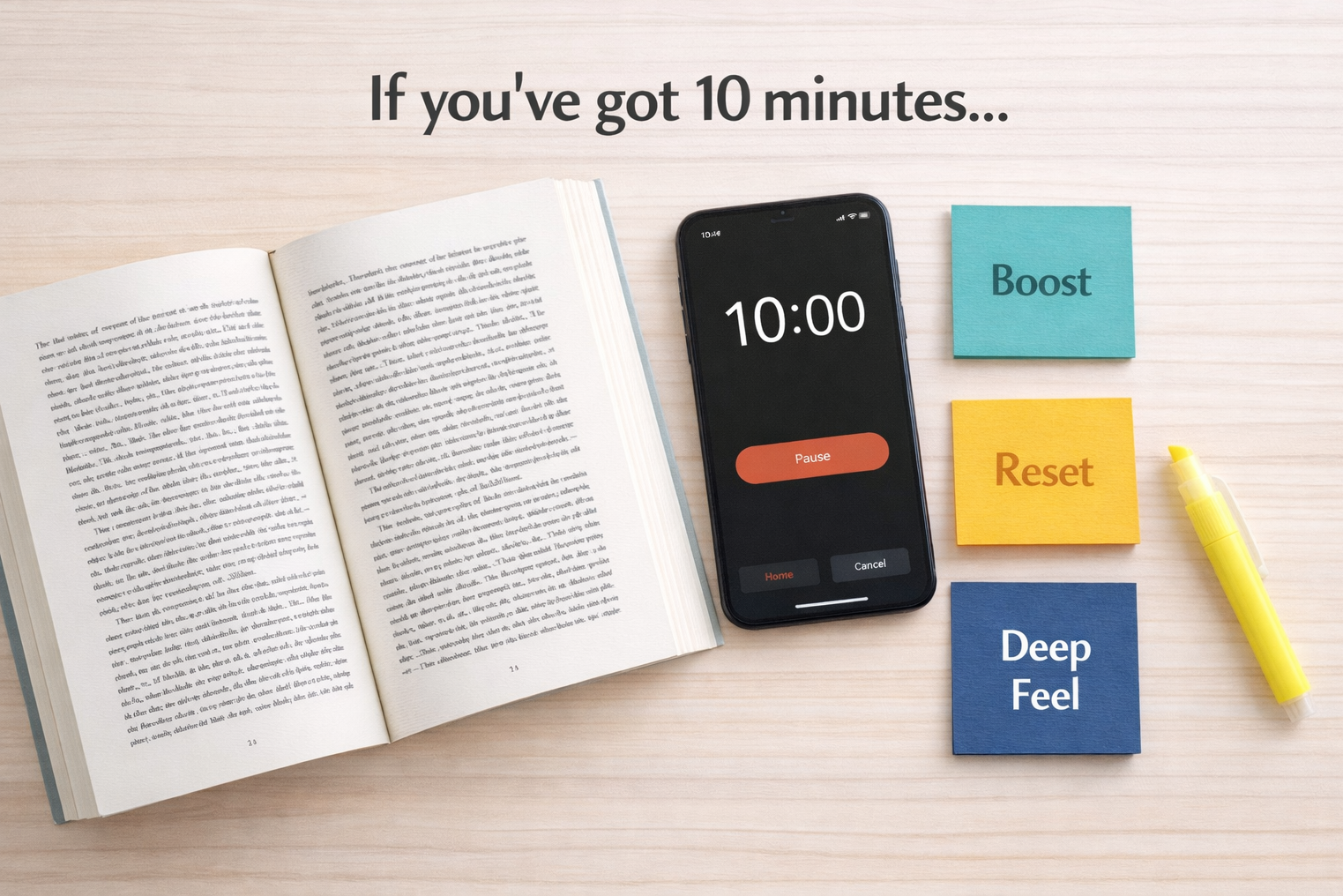
If you’ve got 10 minutes, you can finish a whole story. Seriously. No cliffhangers. No “I’ll come back later” guilt. Just a complete beginning-to-end experience—fast enough for a break, meaningful enough to stick with you.
This guide is a story menu of short stories to read based on your mood and the time you actually have (5 / 10 / 20 minutes). Every pick includes a one-line moral or takeaway, teen-friendly options are clearly labeled, and you’ll also find a gentle section for readers looking for short inspirational Christian stories (inclusive, no gatekeeping).
No long summaries. No spoilers. Just quick reads that feel like something.
Short Stories to Read (Pick by Time + Mood)
Here’s how to use this menu:
- 5-minute boost: tiny stories with big clarity (perfect for busy days)
- 10-minute reset: uplifting stories that soften the edges of a hard week
- 20-minute deep feel: stories with meaning that leave you thinking (in a good way)
Quick Tip: Pick based on your emotional bandwidth—not your “ideal self.” If you’re tired, choose a lighter 5-minute story. If you’re craving depth, go for a 20-minute moral story and let it land.
Want free classics? You can find many public-domain short stories through free public-domain short stories (Project Gutenberg).
The 5-Minute Boost (Uplifting + Easy to Finish)
These are “sip-your-coffee” stories—simple, fast, and surprisingly sharp.
1) “The Lion and the Mouse” — Aesop
- Hook: A small act of mercy comes back bigger than expected.
- Why it hits: It’s a reminder that power isn’t the same thing as worth.
- Moral/Takeaway: Kindness is never wasted—even when it looks small.
2) “The Ant and the Grasshopper” — Aesop
- Hook: Two characters make two very different choices about today vs. later.
- Why it hits: It gently calls out procrastination without preaching.
- Moral/Takeaway: Future-you will thank present-you for planning.
3) “The Wind and the Sun” — Aesop
- Hook: A challenge reveals which force is stronger: pressure or warmth.
- Why it hits: It’s a soft lesson in influence, leadership, and persuasion.
- Moral/Takeaway: Gentleness often succeeds where force fails.
4) “The Fox and the Grapes” — Aesop
- Hook: Someone can’t get what they want—so they pretend they never wanted it.
- Why it hits: It’s basically modern coping in a single minute.
- Moral/Takeaway: Be honest about disappointment; it’s healthier than denial.
Inspirational Short Stories That Don’t Feel Corny
“Inspirational” doesn’t have to mean cheesy. These are uplifting stories that feel human—messy, tender, real.
1) “The Gift of the Magi” — O. Henry
- Hook: Two people try to love well—with almost nothing in their pockets.
- Why it hits: It honors quiet sacrifice without turning it into a speech.
- Moral/Takeaway: Love is measured by intention, not price tags.
2) “The Last Leaf” — O. Henry (themes: illness, hope)
- Hook: In a small apartment community, hope becomes a shared project.
- Why it hits: It shows how support can be practical—not just “positive.”
- Moral/Takeaway: Sometimes hope is something someone lends you.
3) “The Happy Prince” — Oscar Wilde (themes: poverty, sacrifice; slightly longer)
- Hook: A beautiful statue learns what suffering looks like up close.
- Why it hits: It’s compassionate without being naive about the world.
- Moral/Takeaway: Real generosity notices people others ignore.
4) “A Retrieved Reformation” — O. Henry
- Hook: Someone with a past gets a chance at a different life.
- Why it hits: It’s about change that’s earned—quietly, step by step.
- Moral/Takeaway: Your future can be bigger than your worst chapter.
Short Story With Moral Lesson (For Reflection, Family, or Class)
If you want a short story with moral lesson energy—clear takeaway, discussion-friendly—start here. These work for personal reflection, family reading, or a classroom quick read.
1) “The Necklace” — Guy de Maupassant (themes: regret, status pressure)
- Hook: One decision made for appearances spirals into years of cost.
- Why it hits: It’s sharp about pride—without mocking the character.
- Moral/Takeaway: Trying to impress can quietly bankrupt your life.
2) “The Lady, or the Tiger?” — Frank R. Stockton
- Hook: A public choice turns into a private test of love and jealousy.
- Why it hits: It sparks debate instantly—no “right answer” required.
- Moral/Takeaway: What we choose often reveals who we are.
3) “The Open Window” — Saki (themes: deception; light)
- Hook: A polite visit turns into a perfectly executed social trick.
- Why it hits: It’s funny, fast, and shows how stories can manipulate.
- Moral/Takeaway: Believe slowly when you don’t know the storyteller.
4) “The Monkey’s Paw” — W. W. Jacobs (themes: grief, death; darker)
- Hook: A wish comes with consequences nobody asked for.
- Why it hits: It’s the cleanest lesson on “be careful what you want.”
- Moral/Takeaway: Some doors shouldn’t be forced open.
5) “The Tell-Tale Heart” — Edgar Allan Poe (themes: violence, guilt)
- Hook: A narrator insists they’re fine… while unraveling completely.
- Why it hits: It’s an intense look at conscience and denial.
- Moral/Takeaway: Guilt has a way of speaking—even when you don’t.
Use them like this (fast + simple):
- Journal prompt: “What choice in this story feels most familiar to me?”
- Discussion question: “Was the outcome inevitable—or chosen?”
Short Stories for Teenagers (Actually Relatable)
This section is for short stories for teenagers that feel modern in emotion—identity, pressure, friendship, fairness, and “who am I becoming?” (Some are classics, but the feelings are current.)
If you want a safe, classroom-friendly way to explore stories by theme and grade level, CommonLit is a strong starting point: teen-friendly short story library. (Always check each story’s content notes.)
1) “Thank You, Ma’am” — Langston Hughes (themes: second chances)
- Hook: A bad decision meets an unexpected kind response.
- Best for: If you like stories about dignity, consequences, and grace.
- Content note: brief mention of attempted theft.
2) “All Summer in a Day” — Ray Bradbury (themes: bullying, regret)
- Hook: A rare moment arrives—and one cruel choice ruins it.
- Best for: If you like emotional sci-fi with meaning.
- Content note: bullying, isolation.
3) “The Outsider” — H. P. Lovecraft (themes: identity, belonging; eerie)
- Hook: Someone seeks connection, but reality doesn’t match the dream.
- Best for: If you like gothic vibes and “who am I?” themes.
- Content note: horror tone.
4) “The Most Dangerous Game” — Richard Connell (themes: survival; suspense)
- Hook: A hunt flips—fast.
- Best for: If you like adrenaline, twists, and moral tension.
- Content note: violence, hunting.
5) “The Lottery” — Shirley Jackson (themes: tradition, conformity; intense)
- Hook: A town’s “normal” turns horrifying.
- Best for: If you like social critique and uneasy endings.
- Content note: violence; disturbing premise.
6) “The Ones Who Walk Away from Omelas” — Ursula K. Le Guin (themes: ethics)
- Hook: A perfect society has a hidden cost.
- Best for: If you like big questions and quiet moral stories.
- Content note: implied suffering.
Quick Tip: For teen readers, “relatable” usually means clear emotion + clear stakes. Let them choose by vibe (sports, friendship, fairness, identity) instead of “classic vs. modern.”
Short Inspirational Christian Stories (Gentle, Hopeful Reads)
This section is for readers actively looking for short inspirational Christian stories—not as the only way to find hope, but as one meaningful option if faith-based encouragement helps you breathe a little easier.
Instead of preaching, these are short moral stories with faith-forward themes like grace, courage, forgiveness, and mercy.
1) The Good Samaritan (Luke 10:25–37)
- Hook: Help comes from the person nobody expected.
- Faith-forward theme: mercy across boundaries.
- Moral/Takeaway: Compassion is love in motion.
2) The Prodigal Son (Luke 15:11–32) (themes: family tension, forgiveness)
- Hook: A return home tests what forgiveness really means.
- Faith-forward theme: grace that isn’t earned.
- Moral/Takeaway: Restoration is possible—even after failure.
3) The Lost Sheep (Luke 15:3–7)
- Hook: One matters, even in a crowd.
- Faith-forward theme: belonging and being sought.
- Moral/Takeaway: Worth isn’t reduced by being lost.
4) The Widow’s Offering (Mark 12:41–44)
- Hook: A small gift is honored as the biggest one.
- Faith-forward theme: sincerity over status.
- Moral/Takeaway: What you give matters more than what it looks like.
If you’d like to read these in full, many public-domain Bible editions are available through Project Gutenberg’s catalog.
How to Build a 7-Day Short Story Habit

You don’t need a “reading comeback.” You need a small, repeatable loop.
A simple 7-day plan (10 minutes/day):
- Day 1–2: Pick one 5-minute story + reread it once. (Rereads build meaning fast.)
- Day 3–4: Choose one “10-minute reset” story from the inspirational section.
- Day 5: Read one moral story + write 2 lines: “What did it warn me about?”
- Day 6: Choose one teen-friendly read (even if you’re not a teen—clarity is refreshing).
- Day 7: Pick one “deep feel” story and sit with it—no rush.
Where to read: phone, ebook, or print—whatever removes friction.
How to track: one note per story: “Mood + takeaway + best line.”
Permission slip: If a story isn’t for you, quit. Your habit grows when reading feels safe.
For more reading and writing guides, browse the LiberoReads blog.
Conclusion
Pick one story from the menu and read it today—right now if you can. Five minutes counts. Ten minutes counts. A complete story is still a complete win.
And if you’re a writer: reading quick reads and stories with meaning is one of the fastest ways to sharpen pacing, voice, and endings. If you want professional support shaping your manuscript, you can Schedule Free Consultation with LiberoReads.